Beyond Wood: Evaluating the Latest Developmental Toys for Three-Year-Olds
Good Housekeeping's Institute recently put a fresh slate of 2026 toys for three-year-olds through hands-on testing with real families, and the report is worth a careful read — even for readers who, like this column, default to wood and natural fibers.
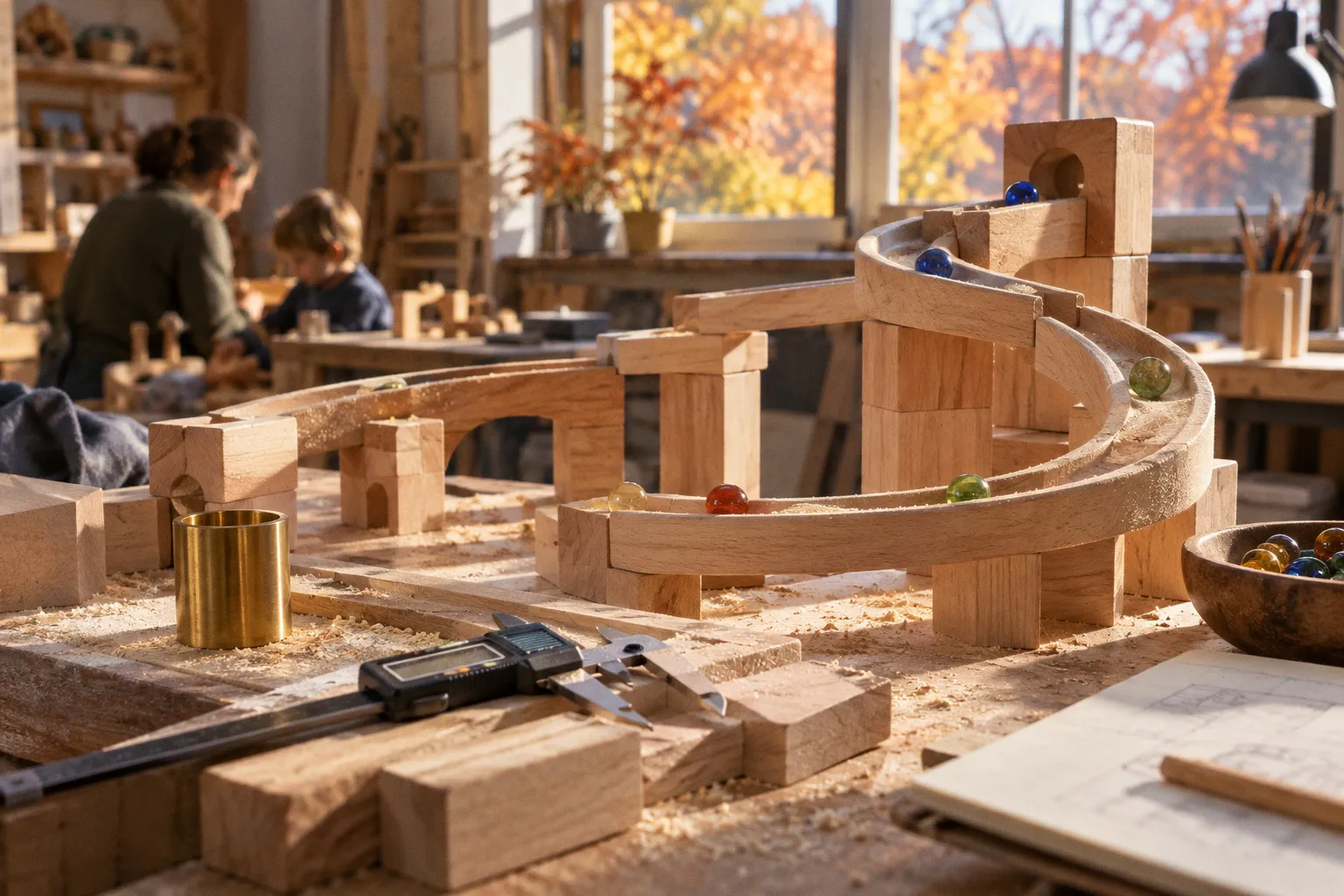
None of the five products that rose to the top are wooden, and that is the first thing a material-conscious parent should notice: the developmental logic behind them still belongs to our conversation about purposeful play, but the substrates do not.
What's in the lineup, read through a material lens
The roster skews plush, plastic, and dough. A fuzzy yoga ball with a removable, machine-washable animal face and illustrated pose cards — also sold as a dog, penguin, sloth, dragon, or unicorn. A battery-powered turntable with six miniature records engineered for tiny hands to load and play solo, four AA batteries included. A play-food set whose pieces appear to "cook" when water is added. A Play-Doh pasta kitchen with sizzling and boiling sound effects, three AA batteries required. And a no-drip semi-solid paint set with eight colors, three brushes, and activity sheets.
Read those descriptions with material integrity in mind and several flags appear. The plush is synthetic by category, and while washability is a real plus for hygiene, fiber origin and dye safety aren't disclosed. The turntable and pasta kitchen are both battery-dependent — the report cheerfully includes "four AA included" and "three AA required" without acknowledging what that means for the toy's working life. Play-Doh's specific formulation isn't itemized in the article, which is itself worth noting for any buyer who reads ingredients. The paint set's "semi-solid" formula is genuinely clever engineering for low-mess creativity, but the report doesn't list what it's semi-solid with. Not one product mentions FSC-certified wood, independently verified non-toxic finishes, or repairability. If you applied the same standards you use in a wooden-toy shop, none of these would pass.
The developmental logic still travels
The report's framing, though, is sound — and worth borrowing regardless of material. Child psychologist Jacque Bogdanov, Psy.D., founder of ChildBehaviorClinic.com, notes that around age three children begin seeking out cooperative rather than parallel play — the right window for matching, memory, and turn-taking games. Imaginative and dramatic play are peaking, as is the need for full-body movement. The five products land on each of those targets, which is why testers kept returning to them.
A wooden shelf answers the same brief without disposable batteries. Cooperative matching and memory games exist in beautifully crafted hardwood versions. Pretend kitchens, play food, and dollhouses deliver dramatic play in solid timber with food-safe finishes. Balance boards, push carts, and climbing arches cover the movement category and outlast every battery-dependent toy on this list. The Good Housekeeping testers proved that real three-year-olds engage deeply when a toy respects their developmental stage. Material is one way to honor that respect — not the only one, but a meaningful one when the alternative is single-use plastic with replaceable cells.
What to actually verify before you buy
If the roundup pulls you toward a purchase despite the plastic and plush, a short check keeps you honest. Confirm the printed age grade — every item here is labeled 3+. Look for any independent non-toxic certification on the paint and dough sets, since the article names none. Inspect the plush seams and battery compartments; both are common failure points under real use. Ask whether replacement parts exist, and whether the toy can be opened, cleaned, and reassembled — a washable face or a fresh set of cards extends working life in ways that matter for both safety and waste.
The honest takeaway: this is a useful snapshot of what engaged real preschoolers in 2026, and a useful reminder that engagement and material integrity are not the same metric. A wood-first shopper can borrow the developmental logic, skip the substrates, and build a more durable playroom — one that survives the daycare rotation, the dishwasher, and the next three years of growth.