Cade California Finger Light Toys Recalled Due to Severe Battery Ingestion Risks
The CPSC's notice names two intertwined hazards: burns and ingestion from button-cell batteries that should not have been accessible in the first place.
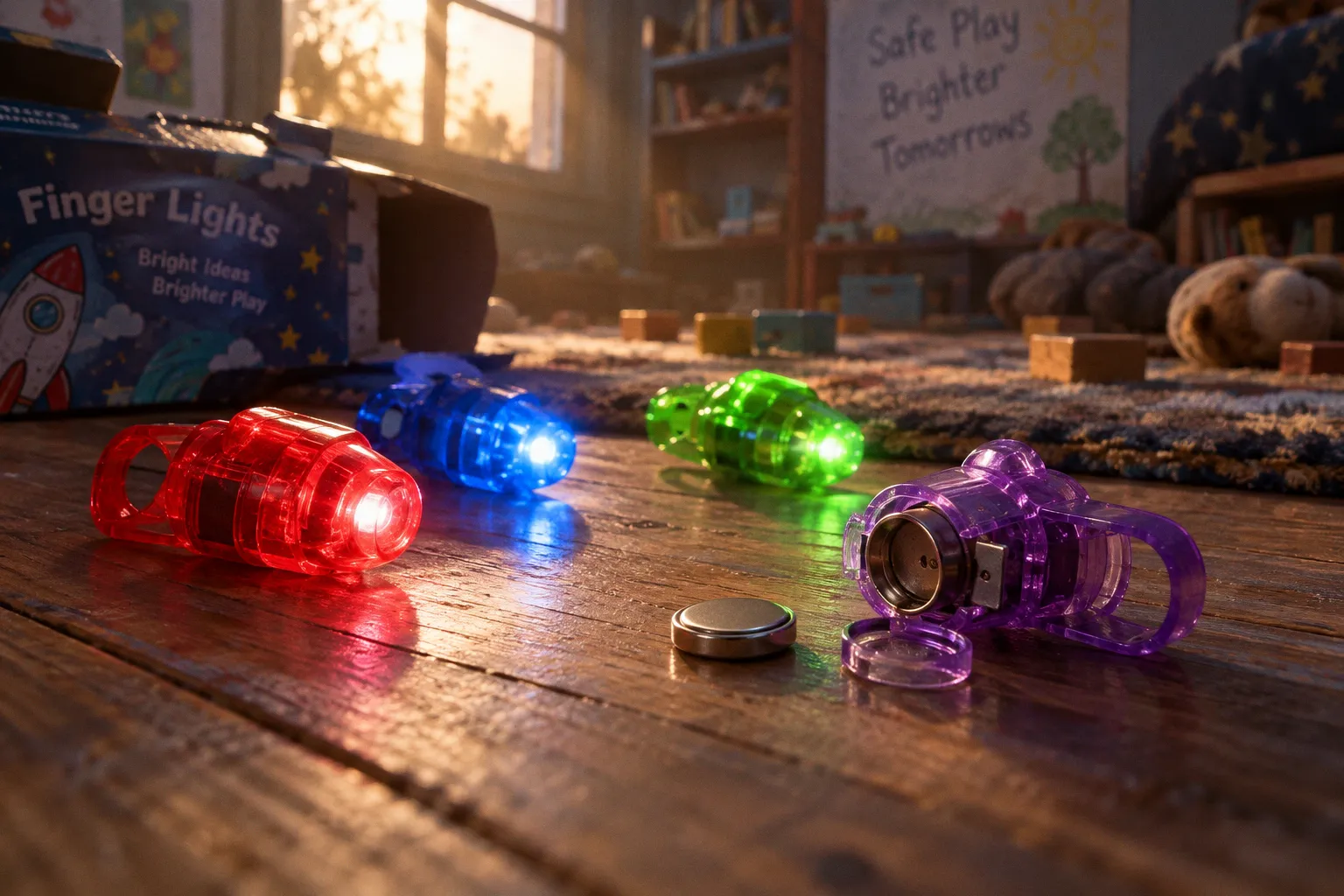
The U.S. Consumer Product Safety Commission has recalled Cade California Electronic's Finger Light toys for failing mandatory toy safety standards, with accessible button-cell batteries posing severe internal burn and ingestion hazards. For anyone building a playroom around material integrity rather than blinking plastic, this is a structural failure, not an isolated mishap — and a useful lens on what belongs on the shelf in the first place.
The Failure Inside the Compartment
That is the core defect — a compartment built without the resistance the federal standard demands. It is the kind of failure mode that non-electronic wooden toys sidestep entirely. A FSC-certified beech block or a beeswax-finished pull toy carries no power source, no soldered circuit, no coin-sized cell waiting behind a plastic door. The absence of a battery is not a feature. It is the safety floor.
Practical Checks Before the Next Toy Enters the Home
Treat any light-up, sound-making, or vibrating toy as a battery-risk product until proven otherwise. Before purchase or first use:
- Locate the battery compartment and note whether the door is screwed shut, latched, or merely clipped into place
- Test it: if a thumbnail or a coin can pop it open, the toy should not be in a setting with young children
- Check the CPSC recall database before gifting, reselling, or accepting second-hand electronics
- When screws are specified, confirm they are actually installed — missing hardware is a recurring reason these recalls happen at all
For nurseries and early-childhood spaces, the standard is straightforward: if a toy cannot survive being chewed, dropped, and investigated without exposing a battery, it has not earned its place on the shelf.
A Broader Regulatory Current
The Cade recall lands alongside new pressure on electronic and AI-enabled toys at the state level. California's SB 867, signed recently, moves to restrict toys bundled with companion chatbot functionality — treating the software itself as part of the product's safety profile rather than a separate compliance question. Reporting from MLive on more than six million recalled products sold through Amazon and Walmart points to the same direction: regulators are catching up to a marketplace where inexpensive, imported electronics have long outpaced inspection.
For parents and educators committed to tactile, durable, non-toxic play materials, the throughline is consistent. The safer the material, the less there is to recall.