EU Safety Alert Issued for Brainboom Stretchmonster Toys Due to Asbestos Risk
According to an official EU Safety Gate alert, Brainboom Stretchmonster sensory toys have been flagged because they may rupture and contain dangerous internal filling.
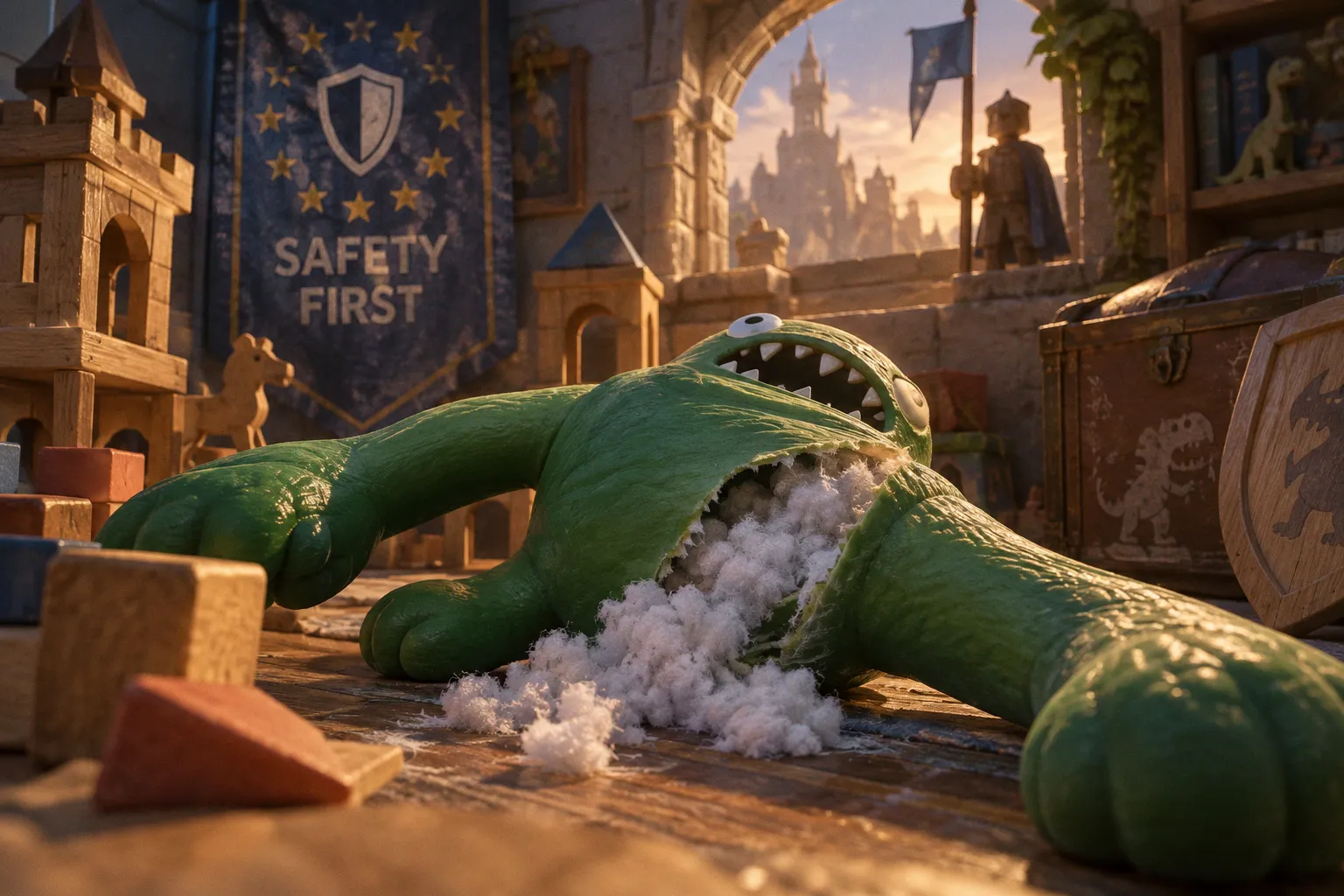
Testing found that the sand inside contains up to 5% asbestos by weight, and the product does not meet EU Toy Safety Directive requirements. For families, nurseries, and playrooms, this is a useful reminder that a toy’s soft, stretchy, sensory appeal does not remove the need to check its construction and safety status.
Why this matters in sensory play
Stretchy toys are often chosen because they give children immediate tactile feedback: squeeze, pull, press, release, and repeat. In a classroom, this kind of play can support calm hands and co-play, particularly when children are waiting, transitioning, or exploring cause and effect.
But the same actions place repeated stress on the toy’s outer material. The Safety Gate alert specifically identifies rupture risks in Brainboom Stretchmonster toys. If a toy opens or tears, its internal filling may become accessible. In this case, the filling is described as sand containing up to 5% asbestos by weight.
That makes this more than a routine question of whether a toy is durable enough for everyday use. It is a product-specific safety alert involving both the possibility of rupture and the composition of the internal material.
What parents and educators should do now
If a Brainboom Stretchmonster is in a home, nursery, therapy room, or school setting, pause its use while checking whether it is the product named in the alert. Do not rely only on the toy’s appearance: a sensory toy can look intact while still requiring verification against the alert.
A practical check is:
- identify whether the toy is a Brainboom Stretchmonster;
- keep it out of children’s hands while its status is being checked;
- do not stretch, squeeze, cut, open, or test the toy;
- separate it from other sensory resources so it is not returned to a basket by mistake;
- record where it was being used and which setting it came from, if that information is available.
The alert is issued under reference SR/02368/26. The available information does not provide batch numbers, seller details, or instructions about returns or disposal, so those details should not be guessed. Families and settings should look for official follow-up information rather than relying on informal posts or assumptions about similar-looking toys.
A safer way to choose replacement sensory resources
This alert does not mean that every stretchy or tactile toy carries the same issue. It does mean that sensory products deserve the same thoughtful screening as construction toys, craft materials, and pretend-play equipment.
Before introducing a replacement, consider how children are likely to use it. Will they pull it with both hands, bite it, share it, or pass it rapidly between children? Is the outer surface likely to split under repeated co-play? Can adults identify the manufacturer and product information easily? These questions help educators match the toy to real classroom behaviour rather than to the packaging alone.
For children who seek tactile feedback, offer a small selection of clearly identified alternatives and observe what the sensory action is doing for them. One child may need firm pushing; another may benefit from kneading, rolling, or moving objects through a container. The aim is not simply to replace one novelty toy with another, but to preserve the regulation and social connection that purposeful sensory play can provide.
Until the flagged product is clearly identified and its status understood, the sensible approach is to remove Brainboom Stretchmonster toys from active play and choose resources with traceable product information and sturdy, age-appropriate construction.