Why the $57 Billion Non-Toxic Toy Market Surge Doesn't Guarantee Safety
According to a market analysis published on openPR.com, the global non-toxic toys market is projected to reach US$ 57.1 billion by 2034.
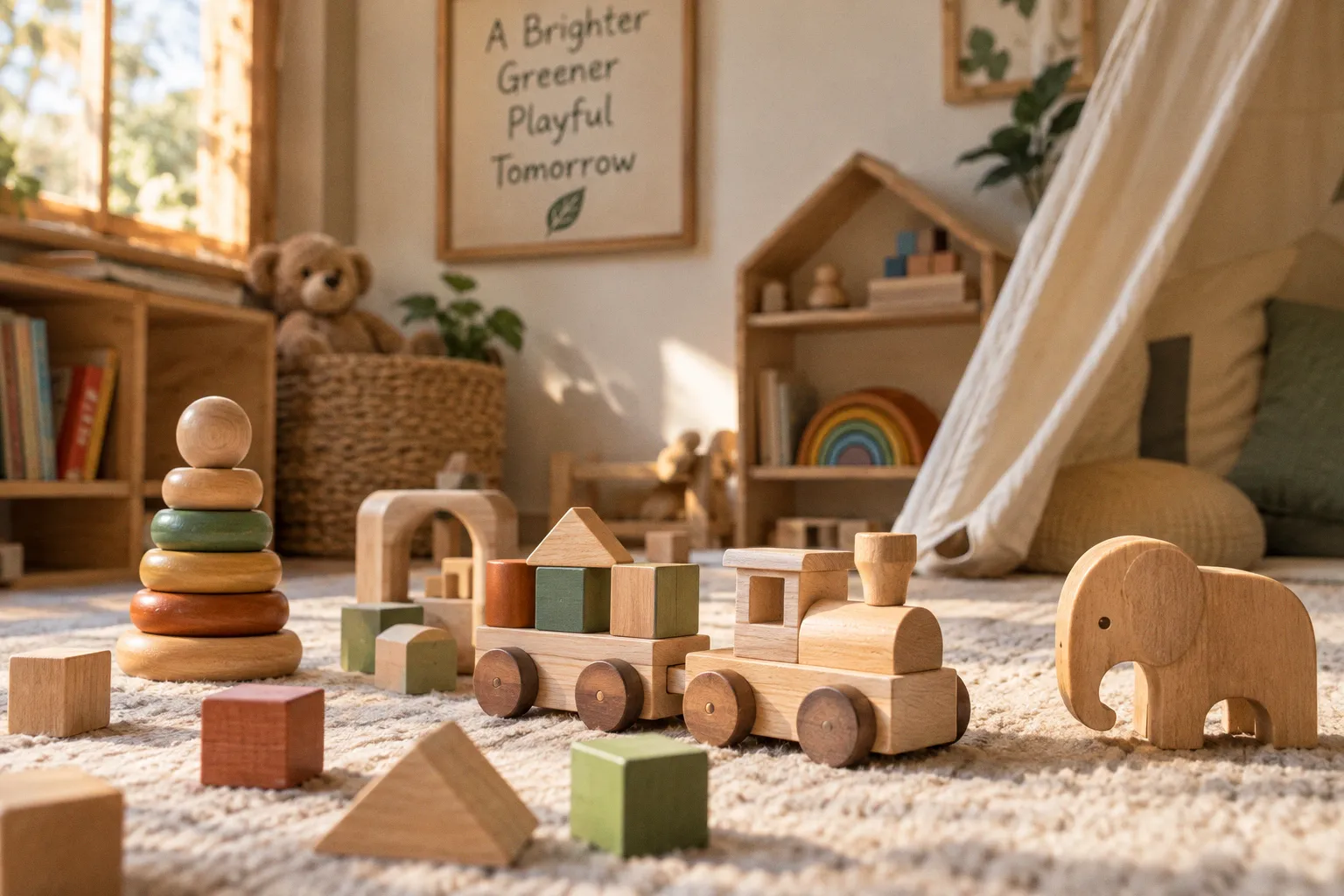
A $57 Billion Promise — But What's Actually in the Wood?
That's a headline number large enough to make any parent sit up — and large enough to warrant a harder look at what "non-toxic" really covers when it lands on a shelf, in a box, in a toddler's mouth.
For families building play spaces around natural materials — solid wood, plant-based dyes, beeswax finishes — the growth trajectory is welcome news. But the market figure alone tells us very little about the material integrity of individual products competing for that spend. A swelling market also means more brands entering the space, some with rigorous standards and some with glossy packaging and loose claims.
The Label Gap: "Non-Toxic" Is Not a Standard
Here's the friction point Leah Griffin would press on: "non-toxic" as a market category is broad, and its definition varies wildly. A toy stamped with a green leaf and the words "eco-friendly" may still carry synthetic finishes, undisclosed binders, or paints that don't meet the stricter thresholds of, say, EN 71-3 (European toy safety migration limits) or the more conservative California Prop 65 benchmarks. FSC-certified wood is a starting point, not an endpoint — it addresses forestry practices, not what happens after the lumber leaves the mill.
Parents scanning this headline might assume the market surge guarantees safer products. It doesn't. Growth in market value can be driven by marketing momentum as much as by genuinely improved material standards. Without knowing the research firm behind the projection, the methodology, or the specific product segments counted, the figure is directional — not prescriptive.
What to Actually Check Before You Buy
The practical takeaway for conscious buyers isn't complicated, but it does require a bit of discipline:
- Ask for the finish. Water-based, food-grade, or plant-oil finishes over raw wood are the tactile standard to seek. If a brand won't disclose the finish composition, that's information in itself.
- Look beyond the wood. Glues, dyes, and any textile components (cotton, wool) should also have traceable, non-toxic sourcing. A solid maple block with an undisclosed adhesive is a half-measure.
- Check certifications, not slogans. OEKO-TEX Standard 100, Greenguard Gold, and FSC certification address different parts of the material chain. A credible manufacturer will reference specific standards, not vague "safe" language.
- Assess durability as safety. A toy that chips, splinters, or degrades quickly becomes a material hazard regardless of its original composition. Tactile integrity over months of play is the real test.
Why the Number Matters Anyway
Skepticism aside, a projected $57.1 billion market signals genuine consumer demand for alternatives to petroleum-based, mass-produced playthings. That demand pressure — even when it's imperfectly met — does push manufacturers toward better material sourcing and third-party verification. The key for families is to treat the growth figure as context, not as a shortcut past due diligence.
What to watch: as more brands enter the non-toxic segment, tracking which ones disclose full material chains — from forestry certification to finishing chemistry — will separate the genuinely principled manufacturers from those riding the wave. The toy in a child's hands is only as clean as its least transparent ingredient.