Melissa & Doug Introduces Cheery Lane: A New Approach to Narrative-Driven Play Sets
According to PR Newswire, Melissa & Doug has launched Cheery Lane™, a play set collection presented as a tool for building worlds and telling stories from multiple viewpoints.
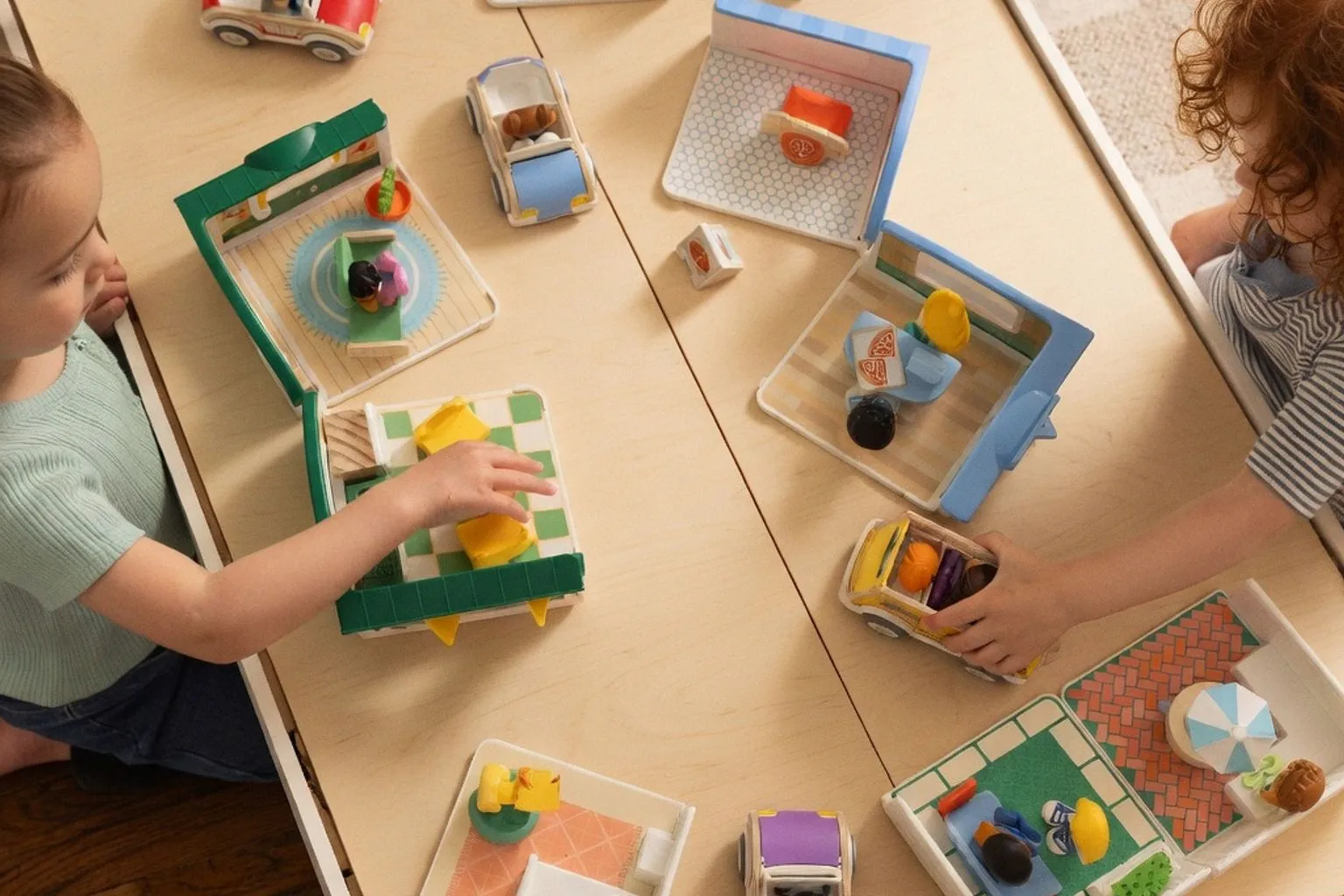
For early-learning audiences, the relevant development is not the marketing language itself but the play structure it implies: children may be invited to combine elements, organize a setting, and construct narratives. The available announcement, however, does not provide enough information to assess the collection’s age range, components, materials, price, or safety specifications.
What the announcement establishes
The confirmed information is limited but specific. Cheery Lane is described as a collection of play sets from Melissa & Doug, with an emphasis on world-building and storytelling. The phrase “from every angle” suggests that the sets are intended to support play involving more than a single fixed scene, although the available source material does not explain whether this refers to physical access, interchangeable layouts, multiple viewpoints in storytelling, or another design feature.
That distinction matters when evaluating developmental value. A product can support open-ended construction, narrative sequencing, or spatial reasoning only when its physical design provides the necessary opportunities. The announcement does not identify the number of pieces, the presence of movable components, or the degree of assembly required. Those details are necessary for a more precise assessment of cognitive load and fine motor demands.
Developmental mechanisms to verify
For a wooden or structured play set, the first practical question is whether the child is configuring the environment or mainly interacting with a completed display. A set with repositionable elements could require spatial planning, visual discrimination, and controlled hand movements. A set with fixed components may place greater emphasis on symbolic play and verbal narrative. Both formats can be useful, but they engage different developmental mechanisms.
Parents and educators should therefore check the product documentation for:
- the recommended developmental stage;
- the total number and type of components;
- whether pieces can be rearranged or combined;
- how much adult assembly is required;
- storage requirements and small-part information;
- material and safety details.
These are not minor specifications. They determine whether the product matches a child’s current motor precision, attention span, and capacity for independent play. Without them, it is not possible to conclude that the collection will produce a particular cognitive benefit.
What to watch before choosing
The launch should be treated as an announcement of a product direction, not yet as evidence of developmental performance. The title positions Cheery Lane around constructive play and storytelling, which is relevant to the early-learning and STEM-adjacent toy market. However, no confirmed facts in the available material establish a testing program, educational certification, specific learning outcomes, or an independent evaluation.
The most useful next step is to review individual set listings once complete specifications are available. Pay particular attention to whether the components support genuine recombination rather than only decorative arrangement. Also assess whether the expected play sequence is sufficiently open-ended for the child’s developmental stage. A well-designed set should provide a clear entry point without limiting every possible configuration.
Definitively, Cheery Lane is confirmed as a newly launched Melissa & Doug collection centered on world-building and storytelling. Its practical value for spatial reasoning, algorithmic thinking, or fine motor precision remains unverified until the physical features and usage requirements are documented.