UK Regulators Block Sensory Toys Due to Toxic VOC Emissions
UK border authorities have turned away shipments of counterfeit Squishy Steam Bunz dim sum sensory toys after laboratory analysis flagged dangerous concentrations of volatile organic compounds in the soft, scented polymer foam.
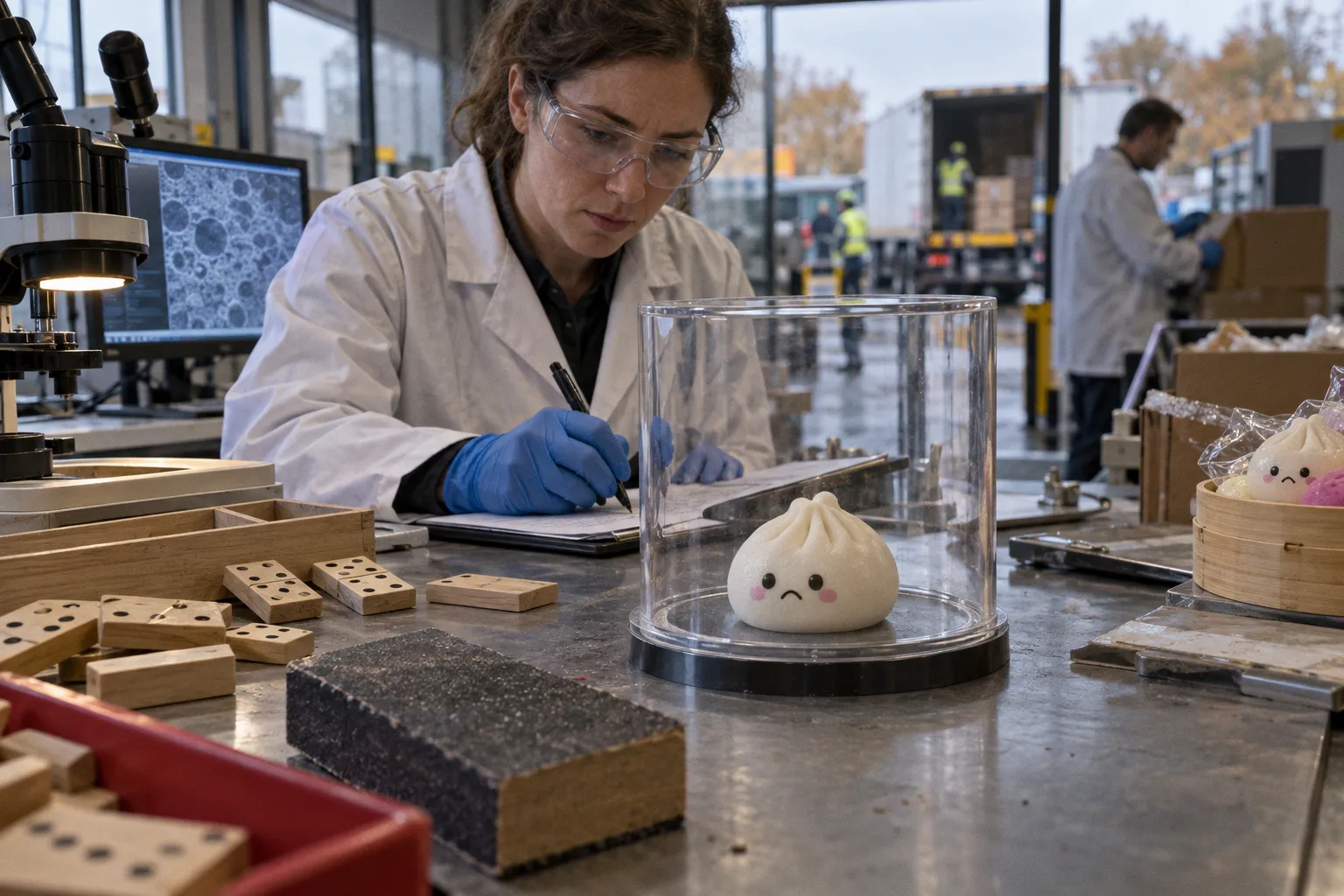
The Office for Product Safety and Standards action, logged under product safety report reference 2609-0019c, exposes a gap that extends well beyond one novelty squishy — it shows how easily unregulated children's products reach the checkouts of parents who trust the word "sensory" on the front of the box.
The Material Reality Inside a Squishy
Independent testing commissioned by Trading Standards identified elevated levels of xylene and styrene migrating from the toy's foam body. Both are classed as hazardous volatile organic compounds, and the OPSS report notes that xylenes in particular may be harmful if inhaled at sufficient concentrations. That phrasing matters: sensory toys are designed to be squeezed, sniffed, and slept beside, which routes any off-gassing solvent straight through a child's breathing zone and across still-developing lung tissue. The food-scented dim sum styling compounds the issue, because fragrance carriers in low-grade foam often signal the very solvents the regulations are meant to catch. Tactile softness, in other words, is not a stand-in for material integrity — and the difference is invisible to the hand but very real to the airway.
Where the Compliance Crumbled
According to the product safety report, the rejected imports carried no evidence that the Toys (Safety) Regulations 2011 had been met. The Declaration of Conformity supplied with the shipment did not match the actual product, valid technical documentation was absent, and there was no demonstrable production control. Required labelling and markings were also missing — the kind of administrative silence that usually means a toy was never put through conformity assessment in the first place. In plain terms, the shipment wore the appearance of a tested item without any of the paperwork to back it up, which is precisely how counterfeit and shortcut goods enter the market under borrowed branding.
A Quick Verification Routine Before a Sensory Toy Enters the Playroom
Sensory tools genuinely earn their place in early development when the material story holds together. A short checklist before purchase filters out most of the risk without requiring a chemistry degree:
- Look for a legible UKCA or CE mark and a named manufacturer or authorised representative somewhere on the packaging or insert.
- Ask for a Declaration of Conformity that names the specific toy, not a generic product line.
- Treat strong chemical or food scents as a warning sign — they often indicate undeclared solvents or masking fragrance in low-grade foam.
- Prefer materials with a traceable safety profile: solid beech, maple, or other FSC-certified wood, natural rubber, organic cotton, or food-grade silicone.
- Read "sensory" as marketing language unless the maker publishes a full materials disclosure alongside it.
The rejected shipment has been stopped at the UK border, but the same informal supply chains feed online marketplaces globally, often routed through third-party sellers. For families building a playroom on intention rather than impulse, the OPSS finding is less a headline than a checklist — and a reminder that developmental value begins with the substance the toy is actually made of.