Wooden play food: a step-by-step guide to safe sanitizing
Wooden play food sets spend a surprising amount of time in busy places: on kitchen floors, inside toy ovens, in small hands, and sometimes in mouths. They collect crumbs, fingerprints, pretend spills, and the occasional real splash of yoghurt or juice.
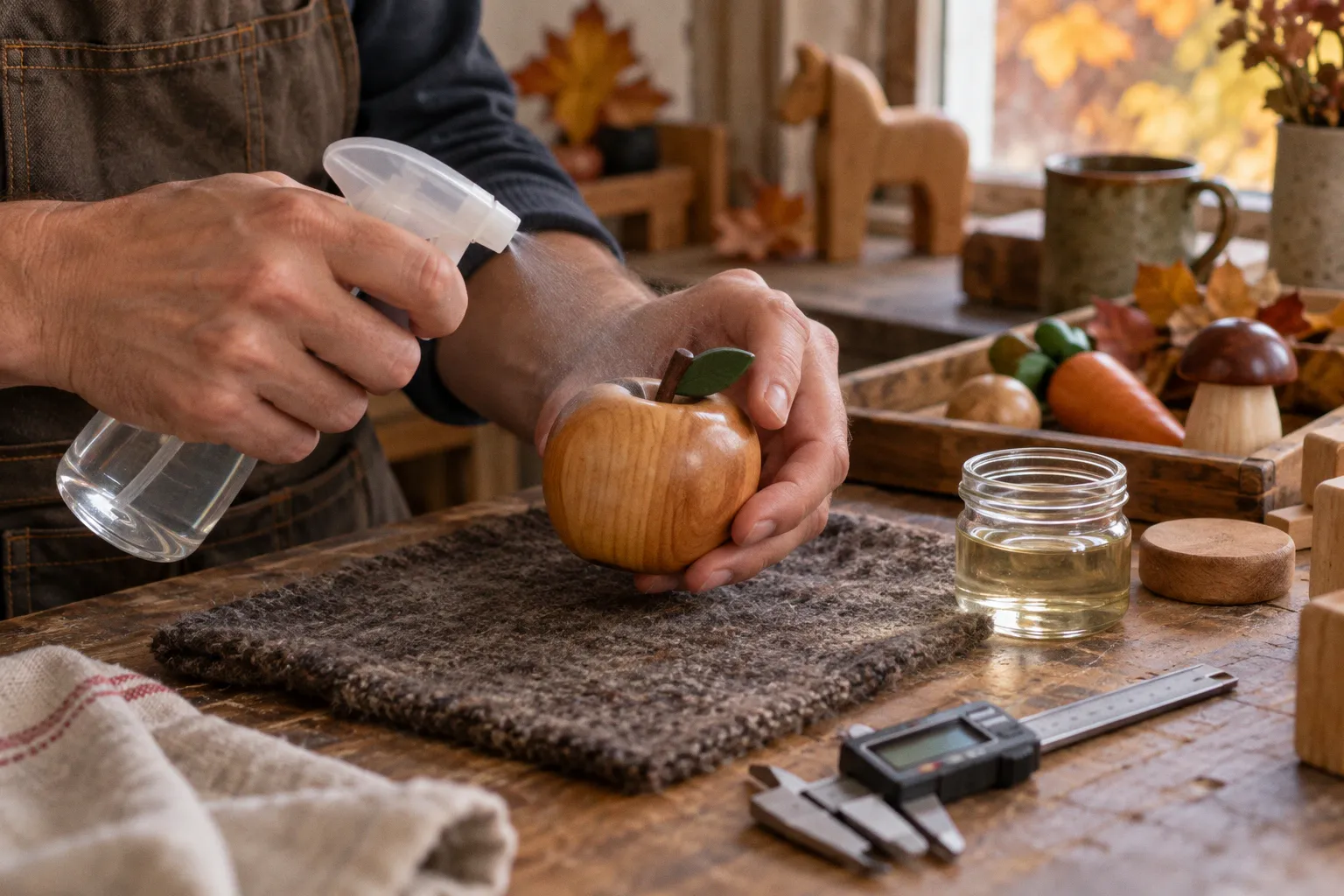
Cleaning them is part of maintaining a healthy play space—but wooden play food needs a gentler routine than plastic toys.
Wood is porous. It can absorb water, swell, warp, crack, and hold on to moisture if it is soaked. The safest approach to wooden play food sets cleaning and sanitizing is therefore simple: wipe rather than submerge, use a mild solution, dry promptly, and protect the finish as it begins to look dull.
Wooden play food does not need a harsh chemical routine. It needs controlled moisture, gentle cleaning, and enough drying time.
Why porous wood requires specialised care
A wooden carrot or pretend loaf may look solid and sealed, but wood is still a natural, absorbent material. Its surface contains tiny pores and fibres that can take in liquid. Even when a toy has a child-safe painted or oiled finish, prolonged exposure to water can find its way into edges, seams, end grain, and small areas where the coating has worn.
That is why a wooden play kitchen accessory should not be treated like a plastic cup. Plastic can usually tolerate being rinsed or soaked. Wooden play food cannot be cleaned safely in the same way.
Moisture can lead to several problems:
- Swelling: the fibres absorb water and expand, which may affect the shape.
- Warping: different parts of the toy can absorb moisture at different rates.
- Cracking: repeated wetting and drying can stress the wood and its finish.
- Mould growth: moisture trapped inside the wood or around joins creates an environment where mould may develop.
- Paint and finish damage: excessive water or strong cleaners can dull, strip, or lift the surface.
In early years settings, this matters because pretend food is often handled repeatedly during co-play. Children may sort it, stack it, serve it to one another, place it in a toy pan, and carry it from the play kitchen to the home corner. The tactile quality is part of the appeal, so cleaning should preserve the natural feel rather than leave the surface rough or sticky.
What routine cleaning is really for
Everyday cleaning removes the visible layer of play: dust, crumbs, oily fingerprints, and small food marks. Sanitizing goes a step further by reducing contamination on the surface. It is not the same as making a toy sterile, and wooden play food should not be treated with the methods used for medical equipment.
For most home and classroom play, the goal is a clean, dry, well-maintained surface that is safe to handle. That means responding to the actual mess rather than reaching automatically for the strongest product in the cupboard.
The dangers of submersion and harsh chemicals
The most common mistake in cleaning wooden play food is also the easiest to make: putting everything into a bowl or sink of water. It feels efficient, especially after a busy play session, but the water can penetrate the wood before you have time to notice.
Never submerge wooden play food, and do not place it in a dishwasher. High moisture and heat can cause swelling, warping, cracking, and damage to painted or food-safe finishes.
Steam sterilizers are also not suitable for wooden play food. Heat and concentrated moisture can affect both the structure of the wood and the surface coating. A toy that comes out looking clean may still be permanently altered.
Harsh chemicals create a different set of problems. Bleach, abrasive pads, and alcohol-heavy wipes can strip natural oils and damage child-safe finishes. They may also leave a residue that children can touch during play and then transfer to their mouths or faces.
For maintaining wooden kitchen toys, avoid:
- Bleach and bleach-based sprays.
- Strong disinfectant sprays unless the manufacturer specifically confirms that they are suitable for that toy and finish.
- Alcohol-heavy wipes.
- Scouring powders and abrasive sponges.
- Long periods of soaking.
- Boiling water or steam.
- Direct heat from radiators, hairdryers, or hot sunlight while the toy is wet.
A soft cloth is usually enough for the physical work. The aim is to lift dirt from the surface, not scrub through the finish.
Choosing a gentle sanitizing solution
A diluted white vinegar solution can be used as a mild cleaning and sanitizing option for wooden play toys. The vinegar should always be diluted with warm water. The available safe dilution range is from 1 part white vinegar to 1 part water through to 1 part vinegar to 10 parts water.
For routine cleaning, many families and educators will find it sensible to begin with the gentlest mixture that suits the mess—such as a 1:10 solution—and use a stronger dilution only when the surface needs more attention. A 1:4 or 1:1 mixture may be chosen for a more thorough wipe, but it should still be applied with a cloth rather than used as a soaking bath.
| Cleaning situation | Practical approach | What to avoid |
|---|---|---|
| Dust, crumbs, and fingerprints | Wipe with a barely damp soft cloth | Saturating the toy |
| Light food residue | Use diluted white vinegar and warm water on the cloth | Scrubbing with an abrasive pad |
| A toy used by several children | Wipe all surfaces carefully, then dry immediately | Returning it to the play shelf while damp |
| Dull or dry-looking wood | Clean first, then condition when fully dry | Applying oil over dirt or moisture |
| A stubborn mark | Repeat a gentle wipe and allow the surface to dry between attempts | Bleach, harsh solvents, or vigorous sanding |
Vinegar is not a magic replacement for every cleaning product, and it should not be presented as a guarantee against every pathogen. Its value here is that it offers a mild, low-residue option for surface cleaning when used correctly. The unknown laboratory kill times for particular pathogens on painted wooden surfaces are one reason to keep the language practical: clean thoroughly, dry completely, and follow any care guidance supplied by the manufacturer.
If you are caring for a toy with a special painted finish, unusual coating, or visible damage, test the solution on a small, less noticeable area first. Stop if the colour transfers to the cloth, the finish becomes cloudy, or the surface feels tacky.
A step-by-step routine for wiping and air-drying
The following routine works well for wooden play food, pretend groceries, wooden plates, and other roleplay kitchen accessories.
1. Remove loose dirt first
Shake or brush away crumbs before introducing any moisture. A soft, dry cloth or gentle brush can clear the seams around a wooden sandwich, the grooves on a pretend waffle, or the underside of a toy plate.
This small step makes the rest of the process easier. If crumbs are left on the surface, wiping can turn them into a damp paste that spreads across the toy.
2. Prepare a small amount of diluted solution
Use warm water and diluted white vinegar in a clean bowl. For routine wiping, a mild ratio such as 1:10 is a reasonable starting point. If the toy has been handled heavily or has more persistent surface residue, a stronger dilution within the 1:1 to 1:4 range can be used cautiously.
You only need enough solution to dampen a cloth. Do not place the wooden pieces into the bowl.
3. Wring the cloth thoroughly
The cloth should be damp, not dripping. This is the point at which you control the moisture that reaches the wood.
Wipe each piece slowly, turning it in your hand so you reach the underside, edges, and any carved details. Pay attention to areas where small hands naturally grip the toy: handles, rims, pretend knife grips, and the edges of wooden fruit.
If the cloth becomes visibly dirty, rinse it separately, wring it out well, and continue with a clean section. Avoid spreading the same residue across every piece in a large set.
4. Work gently around paint and joins
Painted details often carry much of the imaginative value of a play food set. A tomato’s colour, the stripes on a watermelon, or the markings on a wooden biscuit help children recognise and categorise pretend food.
Use light pressure around painted areas. Do not scrub to force out a mark. Strong friction can wear down the finish just as surely as a strong chemical can.
For toys made from several joined pieces, keep the cloth especially controlled around seams. Moisture can settle in narrow gaps, so these areas need immediate drying afterwards.
5. Tackle stains with patience
Removing stains from wooden play food is usually a matter of repeating a gentle process rather than escalating quickly to a powerful cleaner.
Start by wiping the mark with the diluted solution. If it remains, allow the toy to dry fully and repeat later. Some discolouration may be absorbed into the wood or may have affected the finish; trying to scrub it away can create a larger damaged patch.
Avoid:
- Magic erasers and abrasive pads.
- Knives or sharp tools.
- Bleach.
- Alcohol-heavy wipes.
- Undiluted cleaning products.
- Prolonged contact with any liquid.
A small mark is often less harmful than a stripped, rough, or water-warped surface. In pretend play, children are not looking for factory perfection. A well-loved wooden apple can still support sorting, storytelling, sharing, and language development even when it carries a little evidence of use.
6. Dry every piece immediately
Use a clean towel to remove surface moisture as soon as you finish wiping. Then place the pieces in a well-ventilated area so they can air-dry fully.
Keep them away from direct heat and prolonged direct sunlight. Heat can dry the wood too quickly, while strong sunlight may fade painted surfaces and contribute to cracking. Spread the pieces out rather than piling them together. Air needs to reach the edges and undersides.
Do not return the set to a closed toy box while it is still damp. A sealed container can hold moisture against the wood and create an environment where mould may develop.
7. Inspect before returning the toys to play
Once the pieces are dry, look and feel across the surface. A toy should not feel sticky, swollen, rough, or unusually soft. Check for:
- Cracks or splinters.
- Loose parts.
- Peeling paint.
- Deep gaps where moisture may remain.
- A persistent musty smell.
- Any change in shape.
Set aside damaged pieces rather than placing them straight back into a busy play area. A toy with a compromised surface may need repair, replacement, or advice from the manufacturer.
The best cleaning routine is not the wettest one. It is the one that leaves the toy clean, dry, intact, and ready for another imaginative meal.
How often should wooden play food be cleaned?
There is no single schedule that fits every play space. A home set used by one child may need a light wipe when visibly dirty. A classroom set used by many children may need more regular surface cleaning, especially after shared play, messy sensory activities, or food-related craft.
A practical rhythm is to respond to use:
- After visible spills: wipe the affected pieces as soon as possible.
- After messy group play: clean the pieces that were handled most.
- During routine toy care: wipe the complete set, including baskets, plates, serving boards, and pretend utensils.
- After illness in a shared setting: follow the setting’s health and hygiene procedures, while still avoiding methods that damage wood.
- Before long-term storage: clean and dry the pieces completely so residue and moisture are not sealed in.
Do not assume every item in a set needs the same treatment. A wooden loaf that stayed on a shelf may only need dusting, while a pretend spoon passed between several children may benefit from a more careful wipe.
This is where observation helps. Educators often notice which pieces become social magnets: the cake slice everyone wants to serve, the wooden cup used in every tea party, or the pretend knife passed from child to child. Those items may need attention more often than the rest of the set.
Restoring dry or dull wooden play food
Cleaning removes residue, but it can also reveal that the wood itself is beginning to look dry or dull. Over time, frequent handling and exposure to air can reduce the surface’s natural lustre.
Once the toy is completely clean and dry, food-safe conditioners can help preserve the wood. Suitable options include food-grade mineral oil, coconut oil, or beeswax polish. These products should be used sparingly and only when they are appropriate for the toy’s finish.
A simple conditioning routine looks like this:
1. Clean and dry the wooden pieces completely.
2. Apply a very small amount of food-safe oil or beeswax polish to a soft cloth.
3. Rub it gently over the unpainted wooden surface.
4. Leave the conditioner for around 15 minutes.
5. Buff away all excess with a clean, dry cloth.
6. Allow the toy to rest until the surface feels dry rather than oily.
Conditioning is generally needed every 6 to 12 months, depending on how often the toys are used and how dry the surface appears. Painted areas may not need the same treatment as exposed wood, and oil should not be used casually over a damaged or peeling finish.
A toy should never be returned to children with a greasy surface. Excess product can transfer to hands, clothing, and other play materials. The finished surface should feel smooth and nourished, not slippery.
When a toy needs to leave the play shelf
A wooden play food piece may be beyond routine cleaning if it has a deep crack, splintering, loose components, mould, or a finish that is flaking into small pieces. Cleaning cannot correct structural damage.
It is also wise to remove a toy if it has developed a persistent damp smell after drying, particularly when the smell returns each time the piece is handled. This can suggest that moisture has travelled into the wood or a join.
For a valuable or branded set, manufacturer care guidance may offer more specific advice about oils, painted finishes, and repairs. When in doubt, preserve the child’s safety and the integrity of the toy rather than trying an aggressive home remedy.
Extending the play value after cleaning
Cleaning does not have to be a chore that sits outside the play environment. It can become part of children’s practical learning when adults invite them into small, supervised care routines.
A child can help sort the wooden food into baskets, identify which pieces are dry, or set the clean items back into the pretend kitchen. This supports responsibility and sequencing without turning the activity into a lesson. In co-play, you might say that the café needs its dishes ready before opening, then let the child decide where the plates and food belong.
The cleaning process can also refresh a tired play invitation. After the pieces are dry, add:
- A cloth bag or basket for shopping and sorting.
- Small wooden tongs for transferring food.
- Plates and serving boards for turn-taking.
- A notepad for pretend orders.
- A few rhythm instruments for a restaurant song or clean-up cue.
- A sensory play mat to define the kitchen or market space.
These additions extend the same materials into language, social interaction, fine motor practice, and emotional regulation. A child may practise asking for a turn while serving pretend food, use tactile feedback to compare smooth and textured pieces, or rehearse familiar routines such as washing, drying, preparing, and sharing.
The adult’s role is not to take over. Offer a small amount of scaffolding, then watch what the children do with it. One child may focus on sorting by colour, another on dramatic play, and another on the sensory pleasure of handling the smooth wooden pieces. All three are using the set meaningfully.
A calm, repeatable care routine
Safe cleaning of wooden play food sets does not require a cupboard full of specialised products. It requires restraint and consistency.
Remove crumbs first. Use a soft cloth with diluted white vinegar and warm water. Keep the cloth damp rather than wet. Never submerge the toys, use a dishwasher, or expose them to steam. Avoid bleach, abrasive materials, and alcohol-heavy wipes. Dry each piece immediately, then let it air-dry away from direct heat and strong sunlight.
Every few months, inspect the finish and condition dry-looking exposed wood with a food-safe oil or beeswax polish. More importantly, keep watching the toys as children use them. Their condition tells you when a piece needs cleaning, conditioning, repair, or retirement.
A well-cared-for wooden play food set offers more than a tidy toy shelf. It gives children a durable, tactile invitation to cook, serve, negotiate, imagine, and connect. Gentle maintenance protects not only the wood, but the rich play value that made the set worth choosing in the first place.